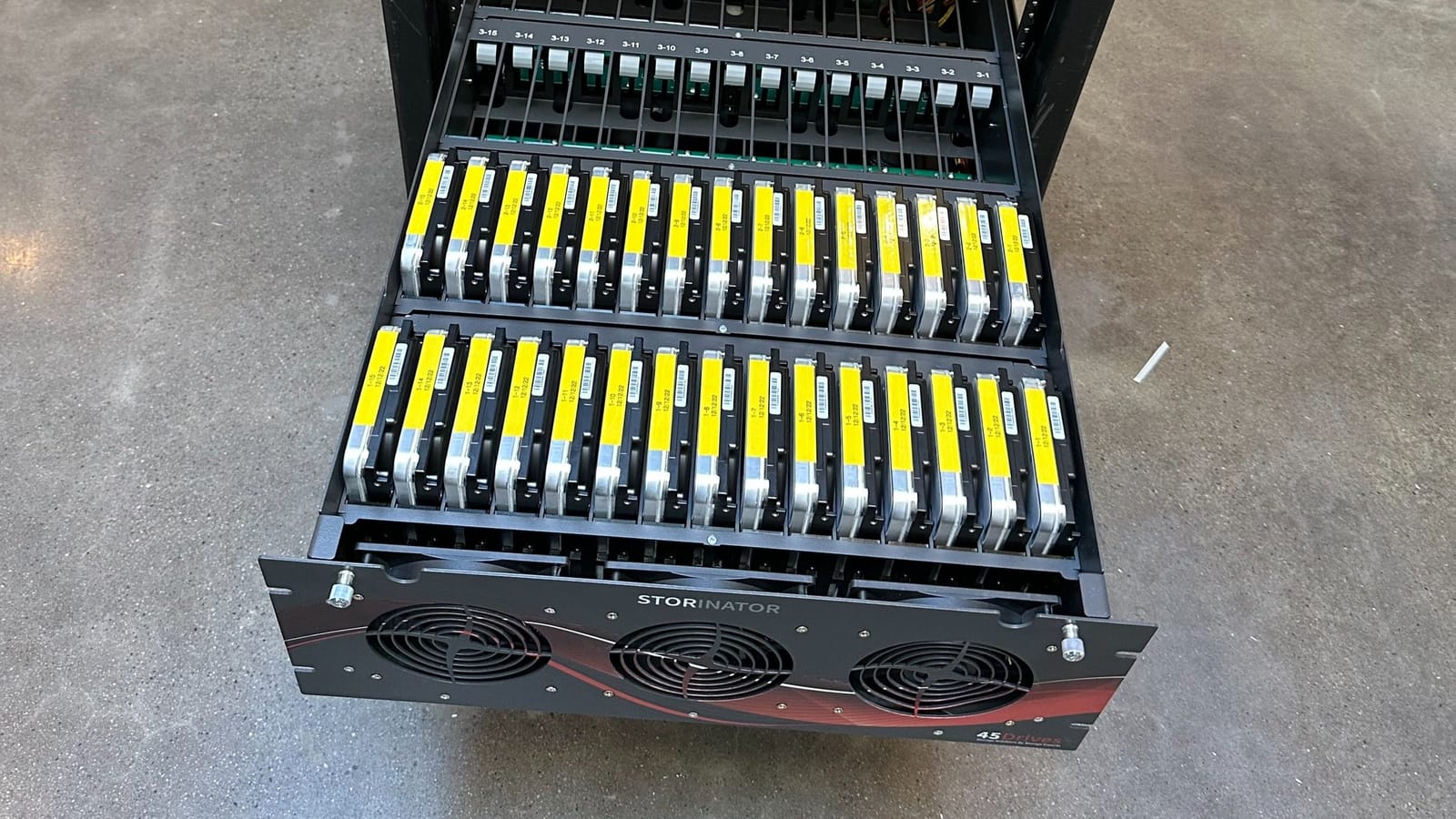
ThirdLaw's 360-degree video work generated large raw files that needed to remain organized and available beyond an individual workstation. I designed a network-attached storage system around the capacity and sustained-transfer demands of that media workflow.
Designing around the footage
The project used a large multi-bay chassis, enterprise hard drives, and multiple storage controllers. Component choices were evaluated as one system: usable capacity, transfer throughput, drive reliability, expansion, serviceability, and recovery all affected the design.
Raw production media changes the balance of a storage build. Sequential performance matters, but so do predictable rebuild behavior, clear monitoring, and enough headroom for the archive to grow without immediately redesigning the platform.
A foundation, not just a drive count
The finished system provided a shared storage foundation for the video workflow. This public account intentionally leaves out access methods, network layout, protection settings, and other operational details that do not need to be exposed.
The build reinforced that high-capacity storage is an operational system rather than a pile of disks. The useful result came from balancing performance, reliability, maintainability, and future growth around the work the team actually needed to preserve.