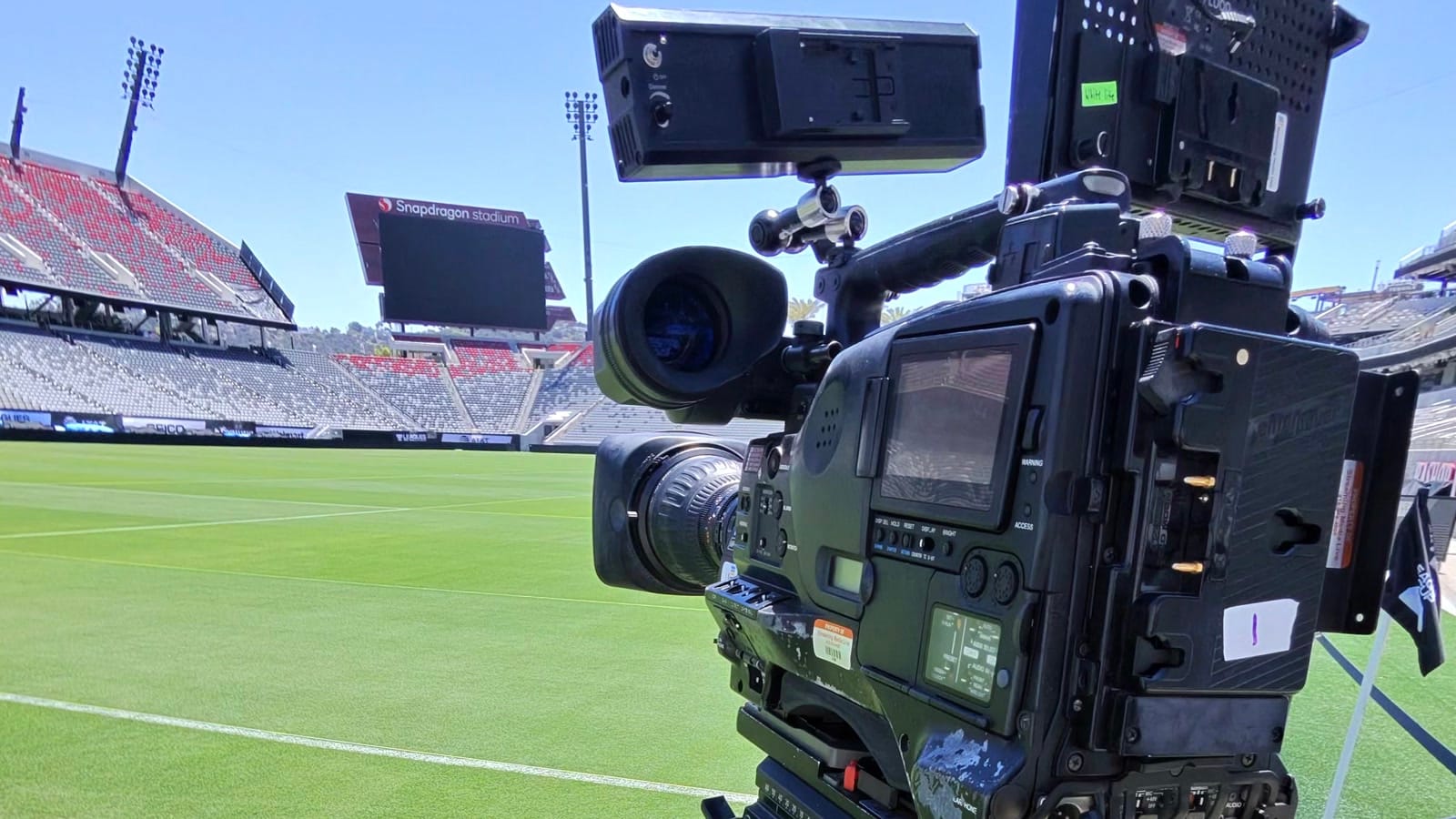
San Diego FC hosted Tigres UANL at Snapdragon Stadium on August 1, 2025, during the Leagues Cup. I supported the partner broadcast in two connected roles: a field-camera position for interview coverage and the LiveU transmission workflow carrying program and supporting signals beyond the stadium.
The assignment crossed the usual boundary between a camera position and the network path behind it. Power, lighting, audio, video, venue connectivity, bonded transmission, and coordination with the production truck all had to work as one system before the first live segment.
Building two connected field positions
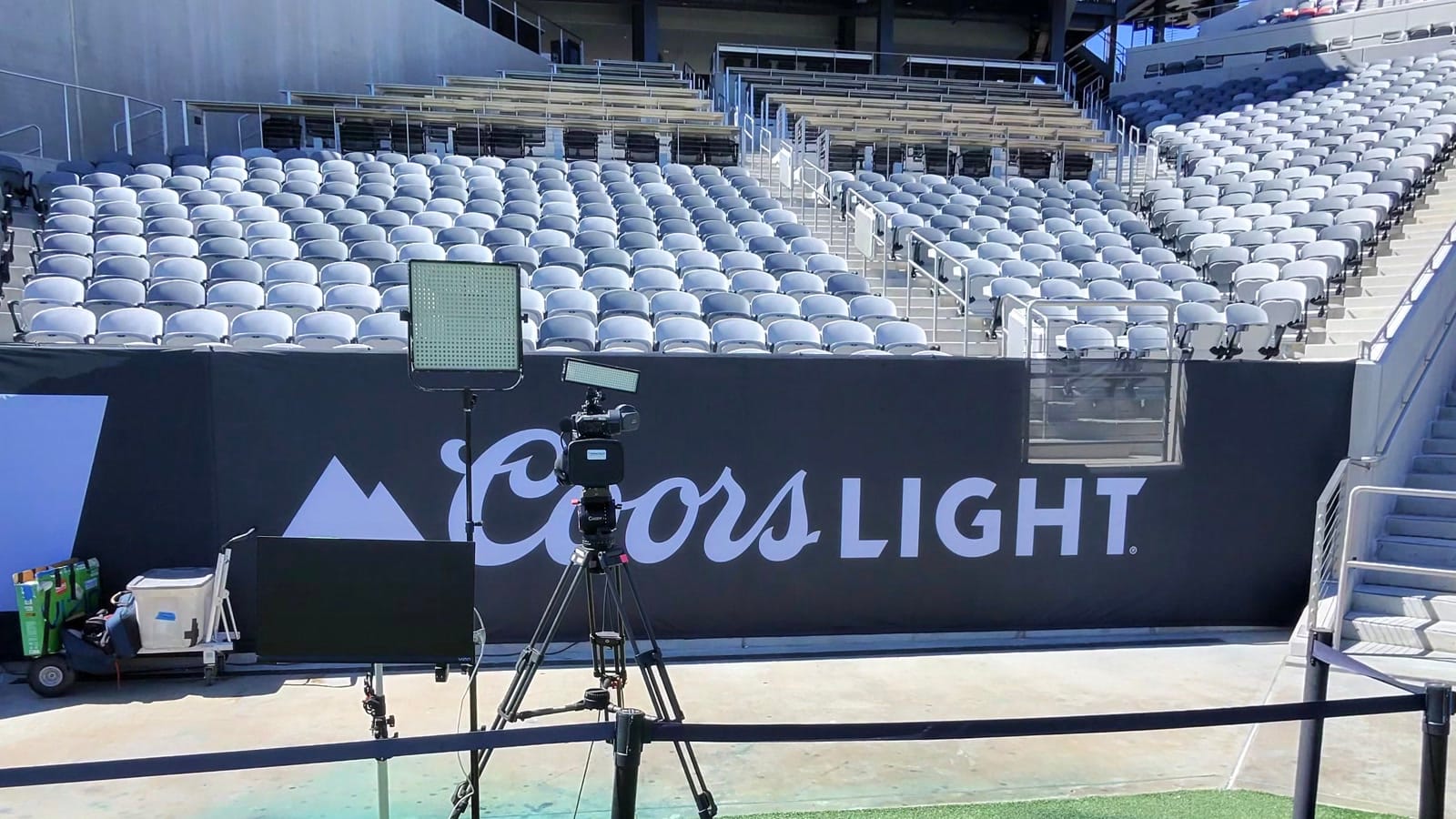
Near the field, I prepared a Sony camera, lighting, a field monitor, and the audio and video handoffs needed for pregame, halftime, and postgame interviews. I coordinated the position's power and network requirements with the venue and checked the return path with the partner broadcast team.
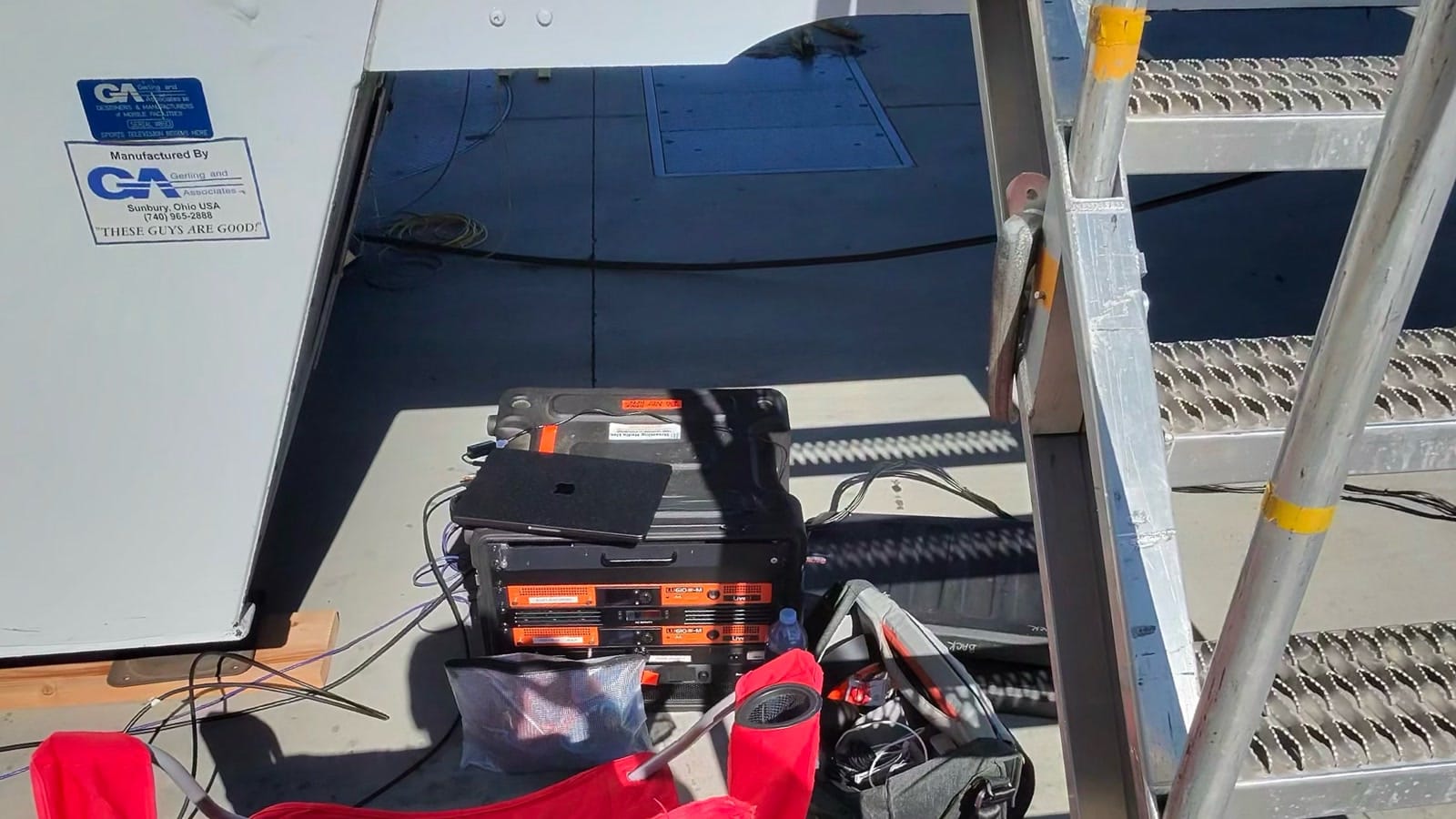
A second position near the production truck housed the LiveU rack. It received the program and supporting audio signals, connected to the truck over Ethernet and video cabling, and used external cellular antennas so Ethernet and cellular could contribute to the bonded path. The two positions served different production needs, but a problem at either one could affect what the remote team received.
Changing the transmission plan during testing
Early tests showed frame drops when the transmission relied on Ethernet alone. I worked with LiveU support and the receiving team to enable simultaneous Ethernet and cellular bonding, then ran extended stability checks before the evening broadcast.
Available bandwidth varied during the extended tests, so I adjusted the transmission bitrate rather than forcing the original setting onto a connection that no longer behaved the same way. Encoder restarts were coordinated during non-live windows so each change could take effect outside a planned segment.
Following the signal beyond the encoder
The video path was only part of the job. Monitoring revealed uneven levels between audio channels, so I coordinated a source-routing adjustment with the truck and verified the correction through the LiveU return. That end-to-end check helped distinguish a source issue from something introduced later in the path.
Communication mattered because the people making decisions were spread across the field, the truck, support, and the remote receiving team. I translated the symptoms into specific checks, kept changes tied to safe operating windows, and helped the teams maintain one view of the transmission while the match schedule continued.
Redundancy as a live operating practice
I remained on assignment through the field segments and live match window. After the event, I completed the equipment breakdown and helped preserve logs for post-show review rather than treating the end of transmission as the end of the engineering work.
This match reinforced that bonded transmission is not automatic resilience. Ethernet and cellular only become a useful combination when both are enabled, observed, and adjusted as real conditions change. The working method relied on extended tests, communication across the handoffs, and deliberate changes before and during the live window.