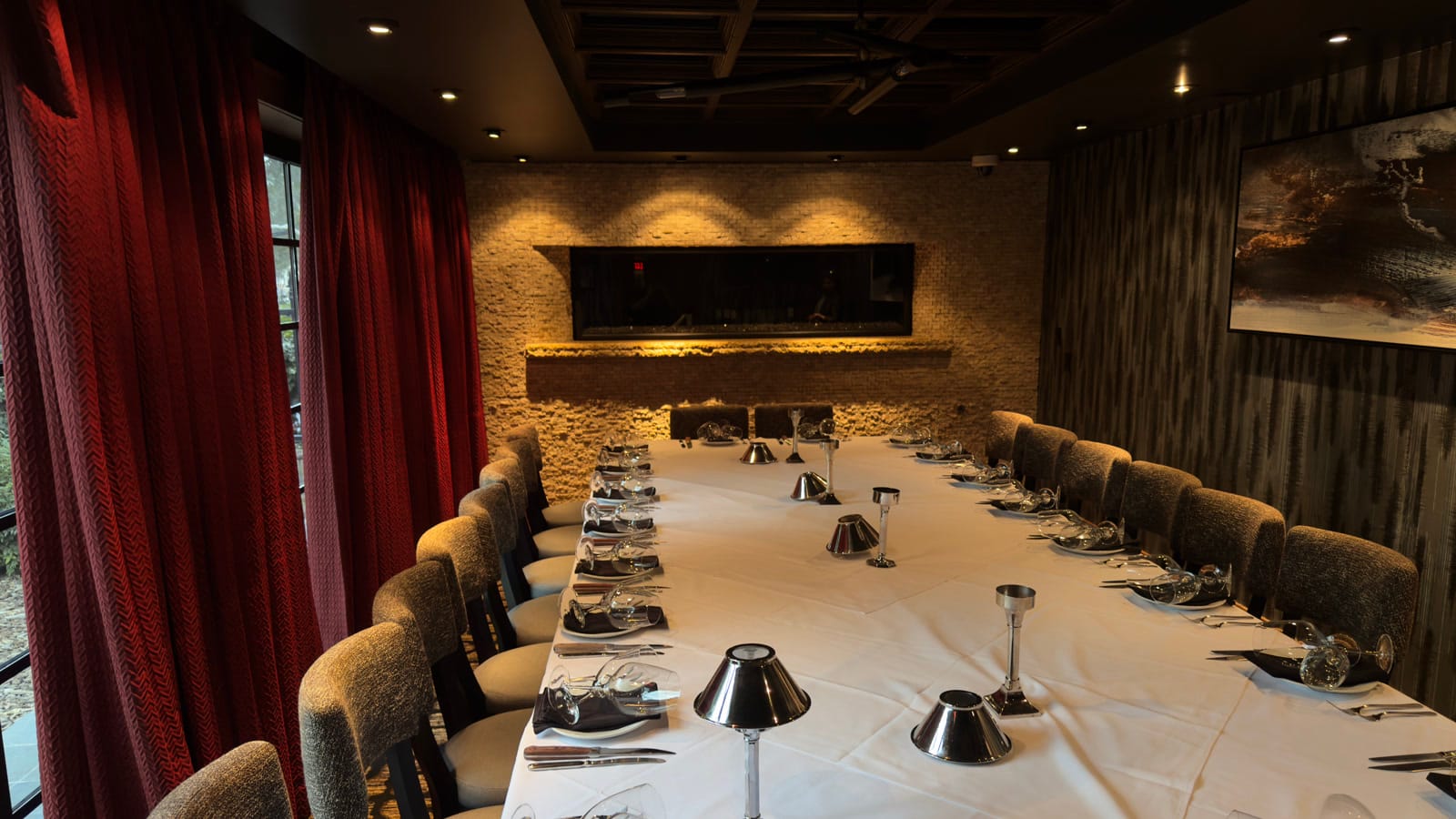
A national webcast dinner on February 19, 2026 depended on connectivity inside a venue that was not designed as a broadcast facility. My assignment started nine days earlier with an on-site survey. The survey changed the technical plan by showing which assumed connections were practical, which were too weak to count on, and where satellite internet could be deployed.
Testing the available paths instead of assuming them
I tested the venue's available Wi-Fi and evaluated whether a wired connection could reach the event room. The physical route made a new hardline impractical, while the available Wi-Fi did not provide the operating margin I wanted for the webcast. I also tested service from three cellular carriers rather than treating a phone's signal indicator as proof of usable backup capacity.
The cellular tests showed that none of the available carriers was dependable enough to count as the event's fallback. That was an important result, even though it removed an easy option. A backup path is only real when it has been tested under the conditions where it will be used.
Surveying the whole room, not only the network
The webcast was receive-only at the venue, so the network was part of a larger room workflow. I reviewed the display and audio arrangement, the limited space available for equipment, and how equipment placement would interact with venue service. A technically strong connection still had to fit into a working dinner environment.
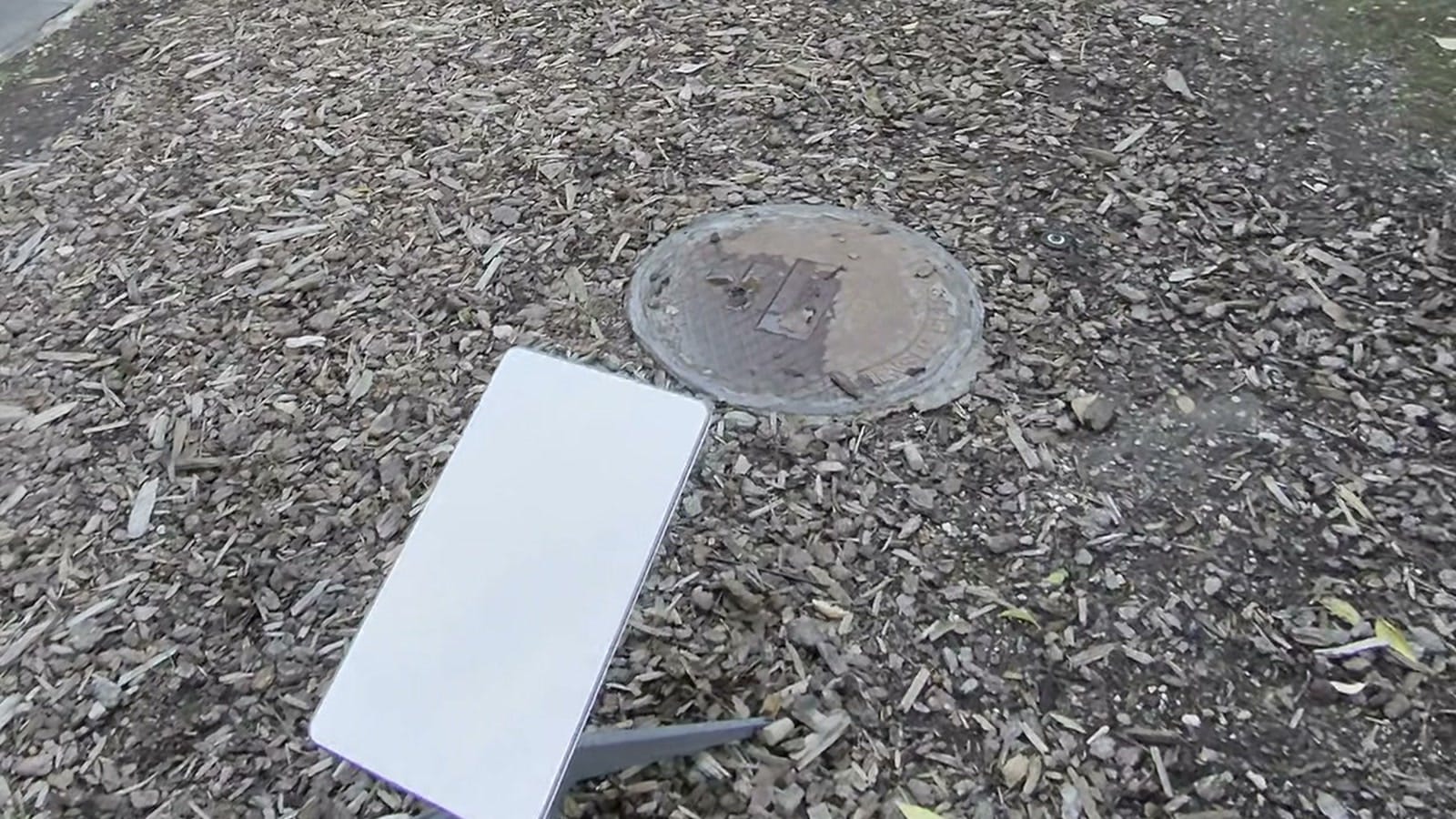
An exterior location offered a clear position for satellite equipment. I documented that access point and delivered written findings and recommendations after the survey. This public account intentionally omits the venue, client, program name, local network measurements, floor plan, remote-access method, and any identifying configuration details.
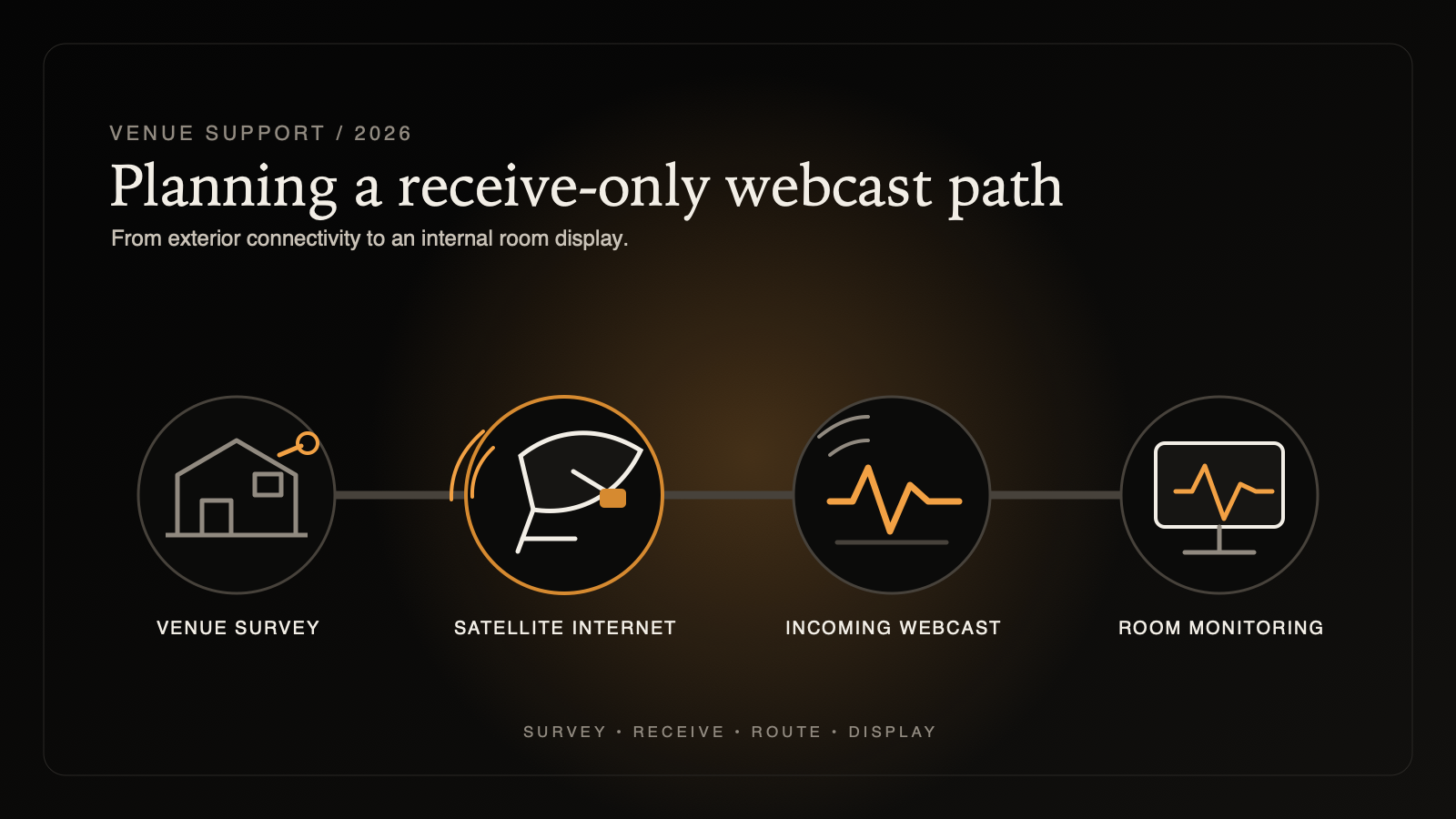
Returning with a plan shaped by evidence
When I returned for the event on February 19, I deployed Starlink as the primary internet path for the incoming webcast and room display. Pre-show preparation included positioning the system, confirming the connection, testing the receive path, and checking the display workflow before guests depended on it.
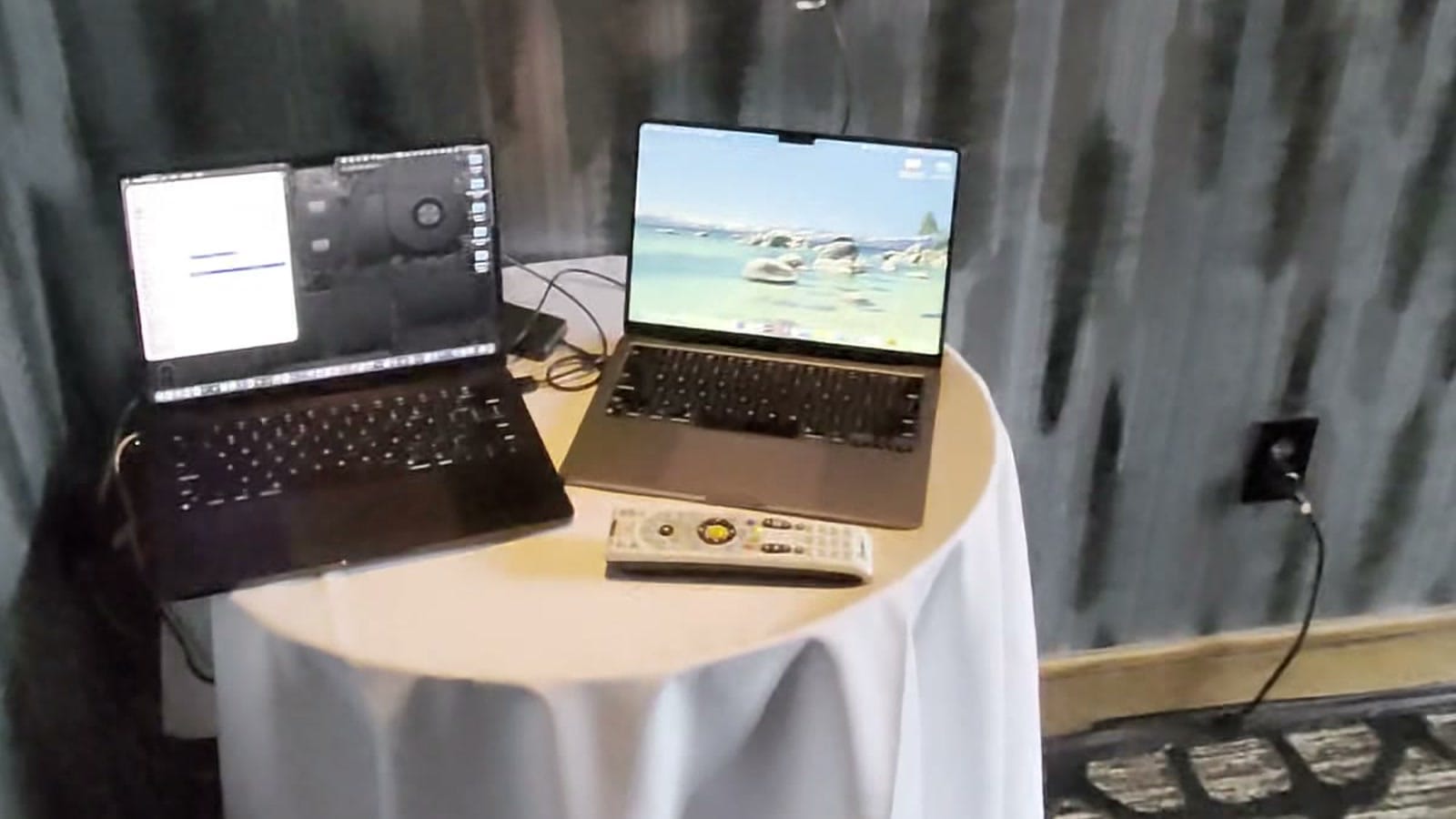
The satellite connection delivered substantially more capacity than the paths available during the survey. More important than the headline speed was its behavior through the event window. I monitored the incoming webcast and display path while coordinating equipment placement and service timing with the venue team.
A successful event that began nine days earlier
The webcast went live at the planned time and was monitored through the event window. The setup followed the evidence gathered during the survey: unrealistic options had been eliminated, the physical satellite position had been identified, and the network plan had been connected to the room's display and operating constraints.
This assignment reinforced why I treat a site survey as engineering work rather than a preliminary visit. Measuring the real environment early made it possible to arrive with a plan built for that venue—not a generic kit and a hope that one of the usual connections would be good enough.