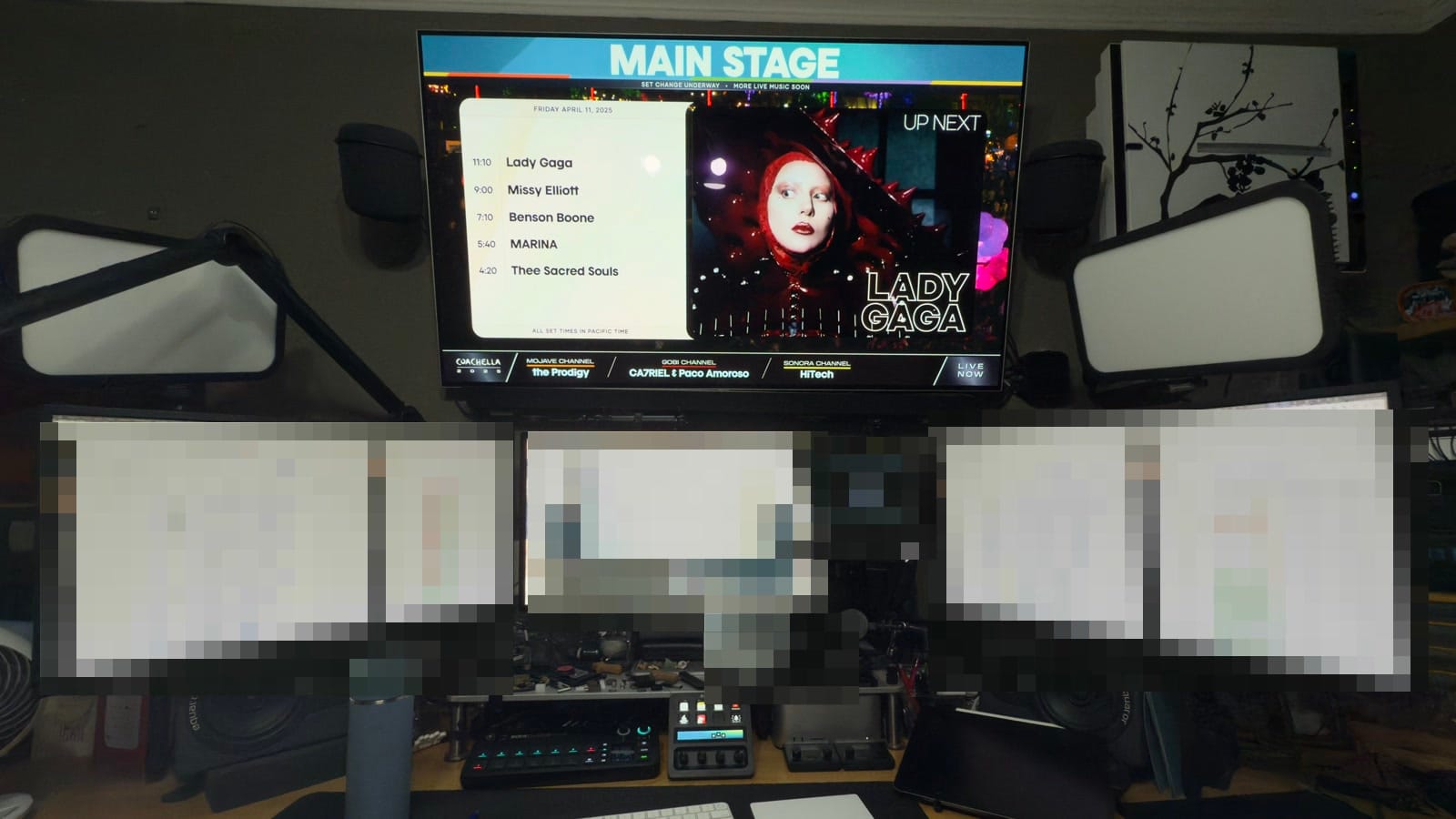
Coachella was familiar work for me, but 2025 was different: instead of being on site, I was able to support the production remotely. I managed the device-networking and monitoring layer behind more than 40 cameras across two stages, along with the RF and production devices that kept those camera systems connected.
Building one remote view across two stages
I configured a compact Linux device to run specialized network-monitoring software as a dedicated observability point. It gave me a single remote view of devices distributed across both stages instead of forcing the team to check each camera position or production system individually.
I organized and labeled the monitored equipment so I could quickly see IP addresses, negotiated network speeds, packet loss, connection state, and how long each device had been online. The same view made address conflicts, intermittent connections, and unexpected state changes easier to spot without exposing the production's private hostnames or network layout publicly.
Finding network trouble before it reached the show
The goal was not simply to confirm that a device was online. I could watch for degrading link speeds, rising packet loss, a device repeatedly dropping and returning, or a network address that did not match the expected configuration. Those early signals gave me a chance to investigate while the camera was still working instead of waiting for a visible failure during the production.
A saved inventory and consistent device history also made troubleshooting faster. I could compare current behavior with the expected baseline, narrow a problem to a device or network path, and give the on-site team a more useful place to start checking rather than asking them to work through the entire chain.
Remote did not mean hands-off
The on-site crew still handled the physical camera and network equipment, while I supplied the wider system view. When something changed, I could trace what the monitoring data showed, communicate the likely scope, and stay with the issue as the field team checked cabling, power, configuration, or the affected device.
For me, that was the real shift in returning to Coachella remotely: I did not need to stand beside every camera to understand the health of the network supporting it. A small, carefully configured Linux system turned dozens of separate devices into an operating picture I could monitor, trace, and use to catch network issues before they became production issues.